Call Us: +8613967673721Email: michaelyu@bldtools.cn
enLanguage

Cable Puller

Why Choose Us
 

Our Factory
Jiansu M&E product series cover multi-functional pullers, ratchets, tighteners, conductor brackets, manual winches, brake capstans, turbine winches, and winches, slings are sold to dozens of countries in Europe, America and Southeast Asia. so we have launched various high-end products for the western market. on the other hand. Jiansu M&E domestic marketing maintains excellence as we win the reputation of domestic and foreign markets and top customer feedback.


Our Product
Hand winch, hand puller, worm winch, brake winch, electric winch, ratchet puller, tie-down, car holder, tow strap.


Product Application
Winch is commonly used in ships, trailers, camping, construction sites and agriculture.Tie-down is usually used to fix goods on trucks, trailers, containers or other transportation equipment to ensure that goods remain safe and stable during transportation.


Production Market
Products in Europe, North America and other countries have a large number of orders, and there are also some trade with Middle Eastern countries.Our products are basically all over the world.


What Is Cable Puller


A cable puller, aka cable tugger, is used to pull cable through a conduit. Rope, which is lighter and more flexible than cable, is manually pulled through the conduit, then tied to one end of the cable being pulled. With one person guiding the cable, the electric cable puller does all of the hard work.

First 12 Last 1/2

 
Safe Lifting & Rigging with Cable Pullers
 

Mastering the use of a cable puller involves safety awareness. By following the steps listed above, you can use these tools effectively and smoothly for a secure lifting operation. We provided additional tips below on safety protocols when handling these devices:

01/

Always perform routine maintenance and inspections to ensure safe usage of the devices.

02/

Never exceed the rated load capacity of the cable puller.

03/

Clear the workspace and keep the area around the cable puller clear of obstacles and personnel to prevent accidents.

04/

Use appropriate rigging hardware to attach the load securely.

05/

Never stand underneath a suspended load, keeping a safe distance.

06/

In case of a malfunction, familiarize yourself with emergency stop procedures and equipment.


New 4T Manual Cable Puller


How Does a Cable Puller Work

The puller typically consists of a hand chain, a chain block or lifting mechanism, and a hook for attaching to the load. You can use accessories such as beam clamps and trolleys, to streamline your operation.


Cable pullers are commonly used in a variety of settings, including construction, manufacturing, and maintenance, and are particularly useful in situations where power or electricity is not available, or where a power hoist is not necessary or practical. They are simple to operate and require minimal maintenance, making them a reliable and cost-effective lifting solution.


Where to Use a Cable Puller

Here are some of the places where someone might use a cable puller:


● Construction sites: Cable pullers are often used at construction sites for lifting heavy materials, such as steel beams, concrete blocks, and construction equipment.


● Manufacturing plants: In manufacturing plants, cable pullers can be used for lifting and moving heavy machinery, engines, and other equipment.


● Warehouses: In warehouses, cable pullers can be used for loading and unloading heavy crates, pallets, and other materials.


● Automotive repair shops: Cable pullers are commonly used in automotive repair shops for lifting and moving engines, transmissions, and other heavy car parts.


● Agriculture: Cable pullers can be used in agriculture for lifting and moving heavy farm equipment, such as tractors and plows.

Auto Repair Tool Jack 2.5T Gear Double Hook Cable Puller Marine KH2500B


Selecting the Right Size Cable Puller


When choosing the proper puller for a specific application, several points must be considered.


By following these guidelines, the removal of gears and bearings will be made easier and safer.


1. Puller reach: Puller reach is the available distance between the pulling surface of the jaw and the jaw head of the puller. This distance varies and decreases as jaws are opened. When choosing a puller, make certain the reach is sufficient to attach the puller.


2. Puller spread: Puller spread is twice the distance from the center bolt to the pulling surface of the jaw. In choosing the proper puller make certain the puller has a large enough spread to attach to the object being removed.


3. Tonnage: Tonnage is the amount of pulling force that can be safely exerted by the puller. Tonnage may be estimated by looking at the torque curves. One rule of thumb in choosing a puller is the center bolt diameter must be at least ½ the diameter of the shaft from which the object is being removed. It is impossible to predict the exact force. Needed for every pulling situation. The amount of press fit and force of removal can vary greatly between jobs. The setup requirements along with the size, shape, and condition

.Of the parts being pulled are variables which must be considered.


4. Safety: Operator safety comes first! Study each pulling application before you select a puller. A significant amount of force can be exerted with a puller. Respect theses forces and always observe safety precautions.


● Always select the proper puller for each pulling job. A puller equal to or larger than required.


● Inspect the puller before each use. Replace any worn or damaged parts with authorized parts.


● Always wear safety goggles when using pullers.


● Always use hand tools with mechanical pullers.


● Never apply heat or alter the puller by welding, cutting, or grinding.


● Support the puller and object being pulled.


4T Tons Of Fine Tensioner Cable Puller Marine KH4000-B3-H


Features of Cable Puller

● Aircraft quality 3/16" cable


● Double solid cast aluminum ratchet wheel brake system holds load securely in any position


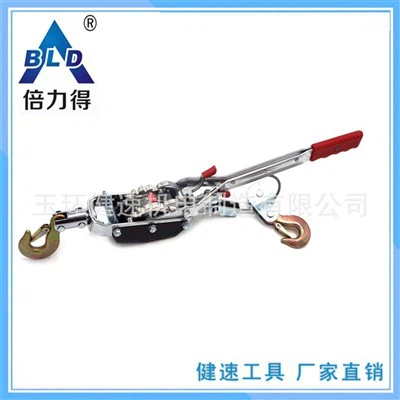
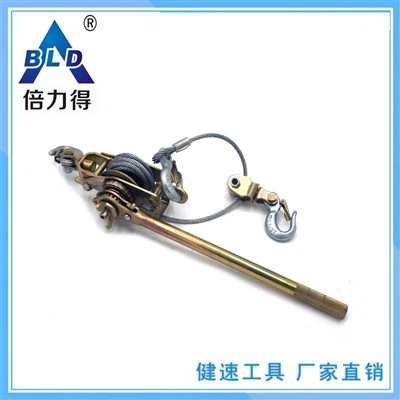
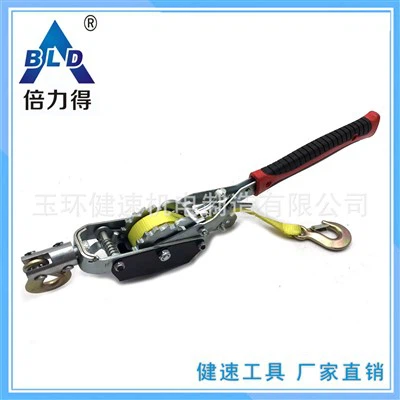
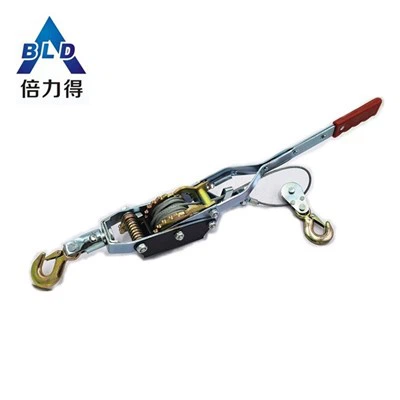
● General purpose cable puller designed to lift, lower, stretch, or pull heavy loads


● Lightweight Zinc Plated Steel Construction


● Lightweight zinc plated steel construction to resist corrosion


● Load tested to 125% of capacity


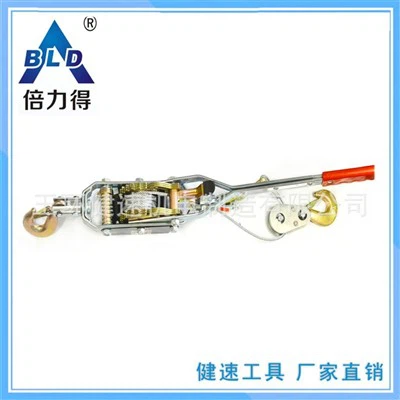
Anatomy of a Cable Puller

Understanding the parts of a cable puller is key to utilizing it effectively. Here are some of the notable ones:


● Handle/lever: This is where the magic happens. By cranking the handle, you activate the ratchet mechanism that moves the cable or chain.


● Frame: The sturdy backbone of the tool, usually made of steel, holding all parts together.


● Ratchet mechanism: The heart of the cable puller, this mechanism allows for the gear to move in one direction and lock in the other.


● Cable or chain: The muscle. This part does the heavy lifting, typically made of sturdy materials capable of handling high tension.


● Hooks: Located at the ends of the cable or chain, these components secure the load or anchor points.

2T Cheap & Affordable Handling Equipment Lifting Tools Cable Puller Marine KH2000


Operating the Cable Puller
 

The first step when operating the cable puller is determining the required amount of cable for your application.


You can do this by putting the handle spring in the free spool position. Then, depress the catch latch and pull out the required amount of cable needed for your application.

● Raising or pulling a load

To raise or pull a load, first, make sure that the handle spring is positioned so that the pawl will properly engage the drum gears.


Handle until the load has reached the desired point for your application.

● Lowering a load

To lower or release the load in a controlled manner, move the handle spring to the position that disengages the pawl from the drum gear.


Raise the handle so that it comes into contact with the catch latch and repeat the process so that the load can be lowered one notch at a time.


Specification of Cable Puller


Made of hardened high-strength carbon steel, color zinc plating, with forging forming, One piece frame construction, by special heat treatment, light weight, small size, strong and durable, easy to carry.


Various Models 1Ton, 2 Hook/ 2Ton, 2 Hook/ 4Ton, 2 Hook Power Puller for Lifting, lowering, Pulling or Stretching.


Features: Adopt high-strength steel plate structure, matched with high-density gear, wear-resistant and tough, 360-degree rotatable, control latch can rotate forward and reverse, with automatic brake device, saving effort.


Thickened Anti-drop Hook Material: Alloy steel thickened hook, x-shaped anti-drop design, submerged tongue, safe and stable, not falling off, long service life.


Scope of Application: Mainly used for various cables such as electric power, telecommunications departments, and traction wires, traction operations of various enterprises and institutions, agricultural, construction industry tight lines, and the fixing of large equipment and goods during automobile transportation.


Our Factory

Yuhuan Jiansu Mechanical And Electrial Manufacturing Co.,Ltd
In the early days, the company mainly engaged in the design and production of electric winch, manual winch, crane and other products. With the increasing market demand, the company gradually expanded the product line and added more product types. Through technological innovation and continuous improvement of product quality, the company has won the trust and praise of customers, and gradually expanded the market share.
Jiansu M&E product series cover multi-functional pullers, ratchets, tighteners, conductor brackets, manual winches, brake capstans, turbine winches, and winches, slings are sold to dozens of countries in Europe, America and Southeast Asia. so we have launched various high-end products for the western market. on the other hand. Jiansu M&E domestic marketing maintains excellence as we win the reputation of domestic and foreign markets and top customer feedback.

productcate-1-1


FAQ
 

Q: Can you use a cable puller to pull a car?

A: Medium capacity (2-4 ton) come alongs are suited for heavy-duty pulling tasks such as vehicle pulling or road clearing.

Q: Is a cable puller as good as a winch?

A: Come alongs are also less efficient than winches since they require physical effort to operate. Not only are they less efficient, but they also tend to have a lower maximum bearing capacity compared to winches.

Q: What is the mechanical advantage of a cable puller?

A: A come along has a built in 1:1 mechanical advantage but when the block pulley is used, a 2:1 mechanical advantage is created. One problem when using the block for a 2:1 mechanical advantage is the amount of cable needed. A 2:1 mechanical advantage uses nearly double the amount of cable that the 1:1 setup uses.

Q: What can I use a cable puller for?

A: At its core, a cable puller is a hand-operated ratchet lever winch. This compact yet mighty tool is designed for moving, lifting, or pulling heavy loads. It is a favorite in construction, landscaping, farming, and home DIY projects. Its simplicity and efficiency provide significant mechanical advantages to the user.

Q: Does a cable puller work in reverse?

A: Features: Adopt high-strength steel plate structure, matched with high-density gear, wear-resistant and tough, 360-degree rotatable, control latch can rotate forward and reverse, with automatic brake device, saving effort. A cable puller, aka cable tugger, is used to pull cable through a conduit. Rope, which is lighter and more flexible than cable, is manually pulled through the conduit, then tied to one end of the cable being pulled. With one person guiding the cable, the electric cable puller does all of the hard work.

Q: Can I use a cable puller to lift?

A: Used for pulling only, they cannot be used for any lifting applications. Cable puller's are available in 1, 1.5 and 2t working loads.

Q: What is the turning portion of a cable puller?

A: On a cable puller, the part on which the pulling rope is wrapped and pulled is called the drum. The drum is a cylindrical component that is designed to rotate as the rope is pulled. It is usually located at one end of the cable puller and is connected to a motor or a manual crank.

Q: How to operate the cable puller?

A: The first step when operating the cable puller is determining the required amount of cable for your application.
You can do this by putting the handle spring in the free spool position. Then, depress the catch latch and pull out the required amount of cable needed for your application.
● Raising or pulling a load
To raise or pull a load, first, make sure that the handle spring is positioned so that the pawl will properly engage the drum gears.
Handle until the load has reached the desired point for your application.
● Lowering a load
To lower or release the load in a controlled manner, move the handle spring to the position that disengages the pawl from the drum gear.
Raise the handle so that it comes into contact with the catch latch and repeat the process so that the load can be lowered one notch at a time.

Q: What are the components of a cable puller?

A: Understanding the parts of a cable puller is key to utilizing it effectively. Here are some of the notable ones:
● Handle/lever: This is where the magic happens. By cranking the handle, you activate the ratchet mechanism that moves the cable or chain.
● Frame: The sturdy backbone of the tool, usually made of steel, holding all parts together.
● Ratchet mechanism: The heart of the cable puller, this mechanism allows for the gear to move in one direction and lock in the other.
● Cable or chain: The muscle. This part does the heavy lifting, typically made of sturdy materials capable of handling high tension.
● Hooks: Located at the ends of the cable or chain, these components secure the load or anchor points.

Q: How does a cable puller work?

A: The puller typically consists of a hand chain, a chain block or lifting mechanism, and a hook for attaching to the load. You can use accessories such as beam clamps and trolleys, to streamline your operation.
Cable pullers are commonly used in a variety of settings, including construction, manufacturing, and maintenance, and are particularly useful in situations where power or electricity is not available, or where a power hoist is not necessary or practical. They are simple to operate and require minimal maintenance, making them a reliable and cost-effective lifting solution.

Q: What is the purpose of a cable puller?

A: At its core, a cable puller is a hand-operated ratchet lever winch. This compact yet mighty tool is designed for moving, lifting, or pulling heavy loads. It is a favorite in construction, landscaping, farming, and home DIY projects.

Q: Why is my cable puller not working?

A: Check the connections and replace any damaged components. Insufficient power – If the winch lacks the necessary power to function properly, it may be due to a weak battery or inadequate wiring. Ensure the battery is fully charged and consider upgrading the wiring to handle higher amperage.

Q: What size cable puller do I need?

A: As a general rule of thumb, aim for a winch with a capacity of at least 1.5 times the weight of your vehicle. This ensures sufficient power for most recovery scenarios while accounting for additional factors like incline, traction, and resistance.

Q: What ratio is a cable puller?

A: A commonly used ratio of boat size to winch capacity is 2 to 1. Example: a 2,200 lb boat requires a 1,100 lb winch. There are, however, many factors to consider in selecting the proper size winch which are beyond the control of the winch manufacturer.

Q: Do cable pulleres work?

A: Hand-operated winches are ideal for situations where there's no power source available. If you're planning to work in a remote area, or if you need a winch that you can depend on in emergency situations, this type of winch may be preferable. A cable puller, aka cable tugger, is used to pull cable through a conduit. Rope, which is lighter and more flexible than cable, is manually pulled through the conduit, then tied to one end of the cable being pulled.

Q: How to lower a cable puller?

A: Brake winches are fully automatic and self-locking, making them more suitable for vertical lifting. The operator can simply crank the handle clockwise to raise the load or counterclockwise to lower the load.

Q: Does the manual winch have a specified weight capacity?

A: Every cable puller has a specified weight capacity that should never be exceeded. Exceeding the weight limit can cause the winch to malfunction or fail, leading to hazardous situations. Always check the manufacturer's guidelines or the user manual to determine the maximum weight capacity of your cable puller. By adhering to this limit, you can ensure the safe operation of the winch and avoid unnecessary risks.

Q: How much weight can a cable puller pull?

A: Makes it easier to move an item by mechanical advantage. Available in all cranking types - hand crank, loop, ratchet styles. Designed for use with cable or strap. Capacities: 400 to 4,000 lbs.

Q: Can a cable puller pull a car?

A: A cable puller can be used for vehicle recovery from virtually any stranding and using the right technique can reduce the required physical effort. A cable puller, aka cable tugger, is used to pull cable through a conduit. Rope, which is lighter and more flexible than cable, is manually pulled through the conduit, then tied to one end of the cable being pulled. With one person guiding the cable, the electric cable puller does all of the hard work.

Q: What is the best rope for a cable puller?

A: Synthetic rope: Synthetic ropes are the most common type of winch rope or cable. They are made of synthetic fibers such as nylon, polypropylene, or dyneema. They are lighter and more flexible than steel cables, making them easier to handle and store.

As one of the most professional cable puller manufacturers and suppliers in China, we're featured by quality products and low price. If you're going to buy discount cable puller for sale, welcome to get quotation and free sample from our factory. For customized service, contact us now.

lifting tool, Attachment, heavy duty

(0/10)

clearall